Kuwaiti Football Balances Tradition, Reform and a New Generation
Kuwaiti football remains one of the Gulf’s most recognizable sporting stories, built on a national team that once turned regional tournaments into its own stage. Kuwait’s 1980 Asian Cup triumph still carries unusual weight in the country’s sporting memory, not simply because it delivered a major title, but because it showed that a small football nation could compete with Asia’s established powers. The blue shirts also reached the 1982 World Cup in Spain, an achievement that continues to shape expectations around Kuwaiti football. In stadium conversations, that generation is remembered through names。goals and hard-running midfielders rather than statistics alone. The old confidence has never disappeared;it has been waiting for a modern structure capable of supporting it.The national side’s recent path has been more uneven. Kuwait football suffered a major interruption after FIFA suspended the country in 2015 over government interference in the affairs of the national federation. The ban kept clubs and national teams away from international competition and disrupted an already fragile development system. When the suspension was lifted in 2017, the return brought relief but not an instant revival. Players had lost competitive rhythm, clubs had missed continental exposure。
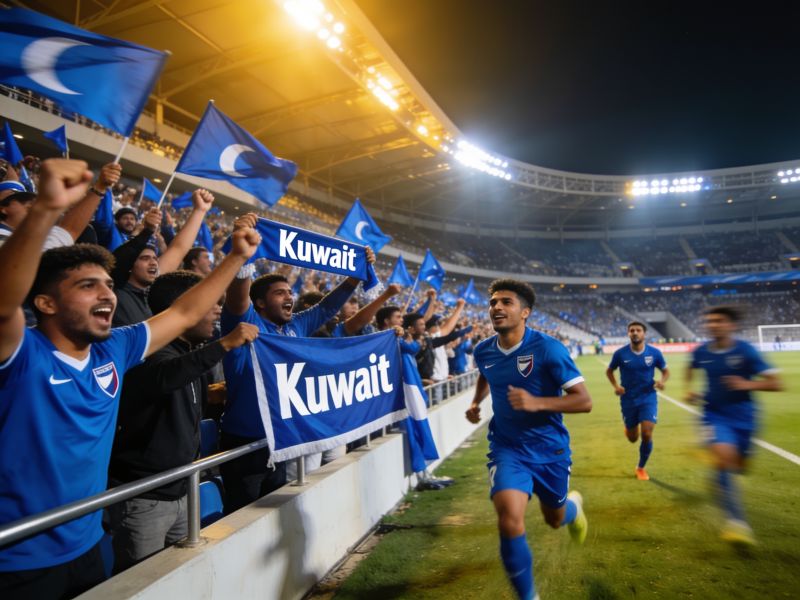
and the national team needed to rebuild its identity. That period explains much of the cautious mood surrounding Kuwaiti football today. Supporters still turn up, but they judge progress against the golden age, making every disappointing qualifying campaign feel heavier than it might elsewhere.Domestic competition remains the engine room of Kuwaiti football, with Al-Qadsia, Kuwait SC and Al-Arabi carrying much of the public attention. Kuwait SC has built a reputation for organization and sustained success。while Al-Qadsia’s rivalry with Al-Arabi gives the league its most emotional fixtures. On derby nights, the atmosphere changes long before kickoff: cafés fill with arguments over lineups, scarves appear on car windows, and older fans compare current forwards with the sharp finishers of previous decades. These matches are not merely entertainment. They provide the pressure young players need, although the league still faces questions over attendance, commercial growth and the gap between established clubs and smaller teams. Kuwaiti football can produce technically gifted players, but they need more demanding weekly competition if the national team is to regain consistency.Development has therefore become the central test. Kuwait has talent in school competitions, youth academies and club age groups, yet the transition into senior football remains difficult. Coaches often praise players for close control and tactical intelligence, then point to a shortage of high-level matches as the missing ingredient. A teenager may dominate locally but face a steep adjustment when confronted with the pace and physical demands of Asian competition. Better sports science, clearer coaching pathways and regular international camps would help, but the solution is not only financial. Kuwaiti football also needs patience from clubs and supporters. Young players are rarely allowed a quiet season to learn;one poor performance can push them back to the bench。while an experienced signing may be viewed as the safer choice.The next phase of Kuwaiti football will depend on whether its institutions can connect historic pride with practical reform. The country has facilities, a deep fan culture and a football identity that has survived political disputes and long periods of frustration. What it lacks is the steady competitive rhythm enjoyed by the region’s fastest-rising programs. A more coherent calendar, stronger youth scouting and regular tests against top Asian opponents would give the national team a clearer platform. There is no need to imitate Saudi Arabia, Qatar or the United Arab Emirates;
Kuwait’s advantage lies in its tradition and compact football community. If that community can give young players time。responsibility and better competition, Kuwaiti football may not recreate the past, but it can build a future that feels authentically its own.
Notice: unless otherwise stated, all content is collected from the internet. If it infringes your rights, please contact us for removal.