Zhou Yinuo's Pictures: A Visual Diary of Urban Stillness
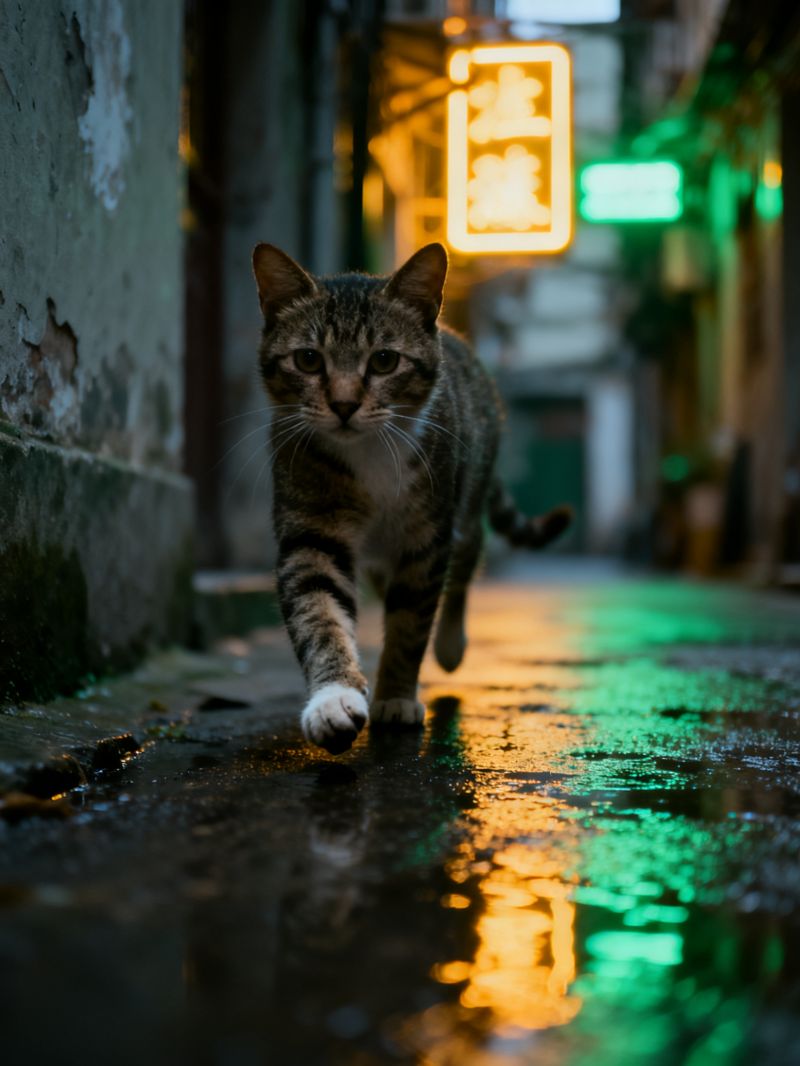
Zhou Yinuo's pictures rarely announce themselves with spectacle. I first encountered a small print of a rain-slicked alley in Shanghai—no people, just a stray cat mid-step and a flickering neon sign for a noodle shop. The image held a quiet insistence, a refusal to perform for the viewer. That's the thing about Zhou Yinuo's pictures: they reward patience. You don't get a punchline;you get a mood that lingers like humidity.Her series on construction sites in Chengdu is where the work deepens. Instead of documenting labor, she waits for the lunch break—when the scaffolding is empty and a thermos sits alone on a concrete block. One photograph shows a half-eaten bun next to a pair of work gloves, the dust on the gloves rendered in sharp, almost loving detail. Zhou Yinuo's pictures here are not about industry;they are about the residue of human presence. She once told me, "I shoot what's left behind, because that's where the truth hides." That sentiment echoes through her handling of light. In many frames, late afternoon sun cuts across a wall。
highlighting a crooked poster or a crack in the plaster. She doesn't beautify decay. She just lets it sit there.What strikes me about Zhou Yinuo's pictures is her color palette—muted greens, rust browns, the gray of wet asphalt. There's a consistency that feels deliberate rather than formulaic. In her Beijing subway series, the fluorescent glare is toned down to a sickly glow, and the commuters' faces are often half-obscured. But she never mocks them. One image of a woman asleep against a handrail, her phone clutched loosely, feels like an accidental portrait. Zhou Yinuo's pictures often hinge on that kind of accidental intimacy. She doesn't stage scenes;she collects them. "I'm not a hunter," she said in an interview. "I'm a scavenger." That self-description fits the grainy。unpolished quality of her prints.Not every frame works. Some of her night shots feel under-exposed to the point of murkiness, and a few street scenes lean too heavily on nostalgia. But when Zhou Yinuo's pictures succeed—like the one of a child's shoe floating in a puddle—they achieve a strange, open-ended clarity. You don't ask what happened next. You just look. Her latest show, "Unfinished Blocks," features a series of nearly empty parking garages, each with a single object: a shopping cart, a fallen sign, a puddle reflecting a broken light. These are not dramatic images. They are stubbornly ordinary。and that's precisely the point.
Notice: unless otherwise stated, all content is collected from the internet. If it infringes your rights, please contact us for removal.